
THE AGE OF INVENTION: CREATIVITY AND SYMBOLIC POWER IN OLD AGE
In dominant cultural narratives, old age is often associated with retirement, closure, or a loss of productivity. Aging is frequently portrayed as a stage of decline, a territory where possibilities narrow and creativity fades away. Yet the history of art and literature offers a very different image. Far from being a time of ending, old age can become a period of expressive synthesis, formal freedom, and extraordinary symbolic power.
When the noise of certainty quiets and the body learns to move more slowly, art becomes a way of inhabiting the world through different eyes. There is no longer any urgency or need to please. What emerges comes from within, carrying the serenity of what has settled over time and the strength of what is true. Creating becomes a way of saying, “I am here,” of transforming experience into words, images, colors, or gestures. Where everyday language reaches its limits, art invents new symbols and meanings. And within that act of invention appears a unique form of joy: not the kind that dazzles, but the kind that takes root.
French artist Louise Bourgeois expressed this profound dimension of creation with remarkable clarity when she stated: “My art is an attempt to give shape and meaning to my emotions, especially pain and frustration.” Her career demonstrates how artistic practice can become a privileged space for reinterpreting experience and transforming memory into art.
Creativity in old age is not merely a poetic intuition. It has also been the subject of academic study. In his book Old Masters and Young Geniuses (2006), American economist David Galenson proposed an innovative theory about the cycles of artistic creativity. According to his research, there are two major creative trajectories. On the one hand, there are precocious geniuses, capable of producing revolutionary works at a young age, such as Picasso or Rimbaud. On the other hand, there are late creators, individuals who develop their artistic language gradually through cumulative processes of exploration and experimentation. In these cases, artistic maturity does not arise from sudden inspiration but from decades of work, observation, and refinement.
Galenson’s thesis challenges one of the most deeply rooted beliefs of contemporary culture: the notion that creativity belongs exclusively to youth. His research shows that many of the most influential works in art, literature, and cinema were produced by older individuals. Experience, far from being an obstacle, can become a source of depth, freedom, and originality.
Along similar lines, Argentine psychologist and gerontologist Ricardo Iacub argues that old age can represent a stage of emancipation from the demands of social performance. As the need to meet external expectations diminishes, the possibility of a more authentic form of expression emerges. Creativity then appears as an exercise in individuality and freedom.
Contemporary culture often worships speed, constant novelty, and productivity. Within that framework, old age is frequently perceived as marginal. Yet precisely because it is less constrained by the pressure to produce immediate results, it can open a privileged space for contemplation, experimentation, and the search for meaning. Where the market demands speed, maturity offers depth; where the logic of efficiency privileges utility, art restores the value of significance. Creativity in old age does not compete with youth. Instead, it proposes a different relationship with time—one that is slower, more reflective, and often freer.
The history of Argentine art provides compelling examples. León Ferrari produced some of his most incisive works after the age of eighty. His artistic language—a singular combination of political critique, formal experimentation, and visual poetry—achieved a radical clarity in old age. In 2007, at the age of eighty-seven, he received the Golden Lion at the Venice Biennale, one of the highest distinctions in contemporary art. Rather than repeating himself, he continued exploring new materials and methods until shortly before his death. His work demonstrates that experience can open new paths instead of leading to repetition.
María Martorell also represents a paradigmatic case of late creativity. Although she had already established an important career, it was in maturity that she reached one of the most innovative phases of her production. Associated with geometric and kinetic art, she developed a visual language of vibrant colors, optical rhythms, and abstract structures that engaged with the most advanced artistic explorations of her time. Institutional recognition arrived when she was already an older artist, and she continued working actively until nearly one hundred years of age. Her trajectory embodies what Galenson described as experimental innovation: a slow and persistent construction that reaches its greatest power over time.
Literature offers equally revealing examples. Giuseppe Tomasi di Lampedusa wrote The Leopard during the final years of his life. Published posthumously, the novel became one of the foundational works of twentieth-century Italian literature. His case demonstrates how late creation can emerge as a form of life synthesis, a way of giving narrative meaning to accumulated experience.
Something similar occurred with José Saramago. After decades of quiet work, it was near the age of sixty that he found the voice that would establish him as one of the great writers of the Portuguese language. Works such as Baltasar and Blimunda, Blindness, and All the Names are the result of a patient process inseparable from the experience acquired throughout a lifetime. His career confirms that maturity can be a privileged territory for invention.
In Argentina, Hebe Uhart offers another remarkable example. Although she had begun publishing decades earlier, it was in maturity that she achieved broader recognition and consolidated a unique voice within contemporary literature. Her writing, capable of discovering depth in the simplest details of everyday life, reveals a sensitivity refined by time and an expressive freedom untouched by any need for approval. In her texts, careful observation, humor, and tenderness become forms of knowledge.
Yet creativity in old age does not belong only to those who pursue professional artistic careers. There are deeply meaningful experiences that demonstrate how the capacity to create remains open to everyone. Writer and art therapist Clara Lanusse has spent years working with older adults through workshops focused on short stories, memoirs, and autobiographical writing. Her approach is not centered on nostalgia but on invention. Participants transform memories into narratives, imagine characters, and discover new forms of expression. Writing thus becomes a space for symbolic reconstruction and personal affirmation.
Her experience shows that creativity does not depend on a specific technique or previous training. Creating, narrating, imagining, and writing are acts that allow people to reclaim time from a different perspective—not as something that is being lost, but as something that can still be transformed.
Lanusse also revisits the idea of “art on prescription.” In some countries, healthcare professionals recommend museum visits, reading, theater activities, or artistic workshops as complements to emotional well-being. Yet beyond their therapeutic benefits, the arts offer something even deeper: the possibility of continuing to build meaning.
Perhaps creativity in maturity does not respond to an urgency but to a whisper. It seeks neither to prove nor to conquer. It is a way of being with time, with others, and with lived experience. At a certain stage of life, creating no longer means manufacturing answers but listening to what has not yet taken shape.
Old age is not necessarily the age of reckoning. It can also be the age of invention. It may be the moment when accumulated experience ceases to be merely memory and becomes the raw material for new forms, new questions, and new possible worlds. If youth is often associated with discovery, maturity may be associated with something equally valuable: the capacity to create meaning. And it is there, in that alliance between experience and imagination, that art reveals one of its deepest truths: it is never too late to create, to transform, or to begin again.
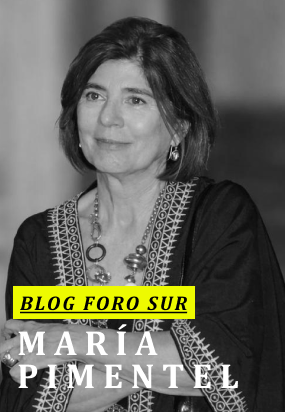
María Pimentel is a curator and cultural manager. She studied Arts at the Faculty of Philosophy and Letters of the University of Buenos Aires (UBA). She directed Academia del Sur, promoted Argentine art in Italy, and brought works by Raphael, Titian, and other great Renaissance and Baroque masters to Argentina. She has curated exhibitions of photography and contemporary painting at institutions including the National Museum of Decorative Arts, the Recoleta Cultural Center, the Embassy of Brazil, and the Fortabat Collection. Since 2023, she has served as Director and Curator of the Contemporary Sacred Art Biennial.
- From the Atlantic to the Pacific: Argentina Risks Missing a Historic Opportunity
- Brazil 2026: When Geopolitics Enters the Voting Booth
- Argentina Tightens Its Migration Policy: An Unconstitutional Decree Deepens a Populist, Xenophobic, and Discriminatory Drift
- A Decisive Week for Argentina: Milei Pushes a Bill That Weakens the Country's Borders
- Between the revolution of the "nobodies" and the representation of the "nevers"
- Corruption Scandals as Catalysts for Historical Denialism in South Korea
- Iran and the Risk of Another Gallipoli
- China’s delicate balancing act in the Middle East
- The Green Trap: Regulatory Rollbacks in Argentina’s Forest Law Risk Restricting Access to European Markets
- PARAGUAY – UNITED STATES – BRAZIL. SECURITY AND ELECTIONS
- VENEZUELA AS A STRATEGIC LABORATORY: POWER, SPHERES OF INFLUENCE, AND THE END OF THE LIBERAL INTERNATIONAL ORDER?
- Argentina’s Labor Reform: Deepening Inequality for Women
- A brief history
- Democracy on the move, citizenship in dispute: redefining democracy from the south
- CHINA FACING THE UNITED STATES
- The Protection of LGBTQ People and Forced Migration in the Face of Discrimination and Climate Change
- The Fragmentation of the Indigenous Popular Sector: Key to Understanding the 2025 Electoral Process in Bolivia
- A New Principle of Public Policy Recognizing Care as a Human Right in Latin America
- Some Reflections on the Genocide of the Palestinian People
- From Idea to Practice: Lessons from Judicial Elections in Mexico
- Stop the Hate: A Moral Imperative. They sow the wind and reap the whirlwind
- Judicial Elections in Mexico: Between Judicial Democratization and the Risk of Narco Infiltration
- India's Multidirectional Foreign Policy
- The War Isn’t About Tariffs—It’s About Innovation. What Can We Do?
- The first Latin American election in the Trump era
- Nuclear Power Plants in Perspective
- An agreement for the present times
- On Tariffs
- Ecuador facing the challenge of resolving the governance crisis through the electoral process
- Social Tolerance to Police Violence
- Preparation for “`the day after” of the Mercosur-EU Agreement coming into force
- WORLD LEADERS COME TOGETHER IN LIMA AND RIO DE JANEIRO
- The Southern Cone Heads to the Polls
- Brazil: What Are They Thinking (The Voters at the Ballot Box)
- Michel Barnier: An honest man
- 80 Years Since Bretton Woods: The Good, the Bad, and the Unfinished Agenda of Multilateral Development Banks
- China: the internal risks of a war over Taiwan
- Hyper-Westernism, Milei, and National Interest
- First Round: Three lessons without waiting
- CLOSING GAPS IN WATER AND GENDER
- What are the French afraid of?
- Europeanist Vocation
- When Impunity Prevails by Popular Will
- The Atacameño Indigenous Communities of the Altiplano Halt Lithium Mining Companies
- The Peace of the Cemeteries
- The Hour of Serious and Responsible Diplomacy: A Farewell to Arms?
- A more unstable world
- Clima y transiciones. La teoría de las puertas cerradas
- Argentina: Our Rights on the Precipice
- Overcoming Obstacles Toward Democratic Transition in Guatemala
- Las lecciones magistrales del profesor Paradiso
- International Financing for a Just Ecological Transition in Argentina
- A Difficult Balancing Act: Latin America and the BRICS
- Horizons and Obstacles for the Creation of a Lithium "OPEC"
- The Crisis of Progressivism
- The European Union-Mercosur Agreement will not see the light of day
- EU-Latin American Relations: a new cycle of illusion (or disenchantment?)
- Guatemala went to the polls with hopes for change
- LITHIUM: A SPACE OF CONFLICTING INTERESTS
- A Revealing Account of Foreign Policy
- The Scars of Digital Violence on Women
- The revenge of history
- Iran, Saudi Arabia and China: A Triangle of Détente
- The Prisons of El Salvador: A Challenge for Latin America
- Sanctions on Moscow: A Bitter Success on the First Anniversary
- Peru: Endless Protest and Indolent Elites
- Perspectives of the Mercosur – European Union Agreement
- Mercosur in Search of an Author
- Brazil, from chaos to a possible strengthening of Lula's power
- Trade Relations between Brazil and Argentina: The Challenges for Lula
- THE COUP IN PERU AND THE COUPS IN LATIN AMERICA
- A 120-Minute Coup d'Etat
- Has anything definitely gone wrong with election polls? Argentina's first survey of pollsters seeks to answer this question.
- Why are the elections in the United States important for Argentina?
- CHINA: ALL OPTIONS ARE ON THE TABLE
- THE INTERNATIONAL POLITICAL SITUATION AND LATIN AMERICA
- Climate Change and its Impact on Women’s Mental Health
- Latin America and the New World Order
- Argentina: Joining the BRICS?
- The Longing for a Social State of Rights
- “Transformation” as a New Critical Orthodoxy? The Strategic Use of Transformation Does Not Prevent Multiple Crises
- Recovering the Social and Productive Mercosur
- Federalism, Politics and Development
- EU-NATO, AN IMPERFECT COMPLEMENTARITY
- Towards more democratic tax confidentiality
- COOPERATIVISM IN THE WORLD
- UKRAINE: PREEMPTION OR EXPANSION
- The Barking of NATO
- A Dis-organised World
- Latin America and the war in Ukraine: 21st Century geopolitics and the emergence of binary maps
- Is China stepping into America’s backyard?
- France and Germany in the Face of the Russian-Ukrainian Conflict
- Nuclear Energy and Climate Change
- IN SEARCH OF A GLOBAL RESPONSE FOR REGUFEES
- Squid Game: Ukraine 2022
- The Antarctic Opportunity
- Argentina and the Stages of Drug Tracking
- The fall of the colossuses
- Nuclear Weapons: The Danger Is Still Around the Corner
- Latin America's chance to participate in the great international cybersecurity challenge
- Integrating Gender Equality into Disaster Risk Management
- Chile: The Battle for the Governance of Change
- The Bachué Project
- Renewing the judicial service in times of pandemic: the experience of an Argentine province
- Prospects on the Eve of the Upcoming Climate Summit in Glasgow
- Nicaragua, from decline to crisis
- The Road to a Free Trade Agreement between Uruguay and China
- Cannabis production in Argentina, the challenge of improving the economy and guaranteeing the right to health
- THE PARAGUAY-PARANÁ WATERWAY: HOW NOT TO MISS THE BOAT OF REGIONAL DEVELOPMENT
- Argentina – Mercosur. Quo Vadis?
- The return of the Taliban to power and the role of Pakistan
- The role of the Chinese Communist Party in the process of national transformation
- A teacher is the President of Peru
- Strategies to fight against arms trafficking in the region
- Crisis and Transfiguration of Multilateralism
- The principle of "non-intervention", democracy and human rights in Latin America: the Nicaragua case
- Nuclear Energy, a hostage to the global dispute
- Justice and safeguards against men who perpetrate gender-based violence
- Chile: between hope and skepticism
- Gender: the debate on women in the OECD and WTO
- 30 years of Mercosur: expectations and challenges in science and technology
- Opening up to the world unilaterally is as anachronistic as isolating oneself from it
- Education for diversity
- A crackdown on Russia and China. The risks of Biden's strategy
- Reflections from here
- Current challenges in International Relations
- The United States between two major crises: Bubbling Capitalism
- Socially responsible investment is here to stay
- Public policy in the XXI century, during and after the pandemic
- The parity illusion in the Justice system
- The assault on the US Capitol: echoes of the 1920s
- Understanding China
- Covid 19. The vaccine: a chemical weapon
- Action and adaptability to generate opportunities
- The main role of the female education workers in an exceptional year
- Is the American polyarchy at risk?
- The Role of Unions in Biden's Win
- Christophobia, the chinese vaccine and the coherence of bolsonarism: a threat to democracy in the region
- The United States: The Collective Reconstruction of "We The People"
- Intellectual Property in the EU-MERCOSUR Free Trade Agreement: Opportunities and challenges for family farming
- Lessons from a walker — Integration and culture on the road to Santiago de Compostela
- South America: the return of constitutional politics
- NAGORNO KARABAGH, A CONFLICT INVISIBILIZED BY HISTORY
- But maybe there is a key...
- Women mediating in peace processes. Personal chronicles and reflections
- ACTIVE AND DIVERSE INTERPOLARITY
- Will the Lebanese phoenix rise from its ashes?
- To assume the existence of a community
- Digital gender gap: a challenge for Latin America accelerated by the pandemic
- CHILE AT A TURNING POINT
- "We are different; we don’t want to be unequal": Women in cities and in the pandemic
- New Silk Road: connectivity for a shared development
- GEOPOLITICAL RISKS IN EURASIA
- You should not think it is just sheer luck
- Post-Pandemic Thoughts: Reconstructing the Right to Privacy
- No one is saved alone
- Pandemic and civilizational change
- Pandemic, racism and human rights
- Donations and Good Practices to mitigate integrity risks during the Pandemic
- THE CHALLENGE OF FINDING BALANCE FACING A MORE BIPOLAR WORLD
- New compasses for uncharted waters
- New agenda for information literacy
- International flows and the comprehensive health of Argentina
- Am I black enough?
- Insecurity: The challenges of the post-pandemic
- Possible agreements facing a more challenging world
- Science and epidemics
- The void place
- What Argentine project for the post-pandemic?
- The importance of China in Argentina's development
- Borders, sovereignty and regional integration in pandemic times
- Multilateralism after the coronavirus
- The deconstruction and legitimization of Justice
- CONNECTIVITY, DIVERSITY, SOLIDARITY
- Coronavirus: the aftermath of a mistaken globalization
- Homecare professionals: More important than ever, as forgotten of as ever
- IN FAVOUR OF THE RETURN
- The pandemic and beyond...
- A debate that goes viral: new rights in Teleworking times
- ¿El comienzo de una nueva era?
- Del Brexit al terrorismo
- La fuerza de la historia
- La Argentina que se viene
